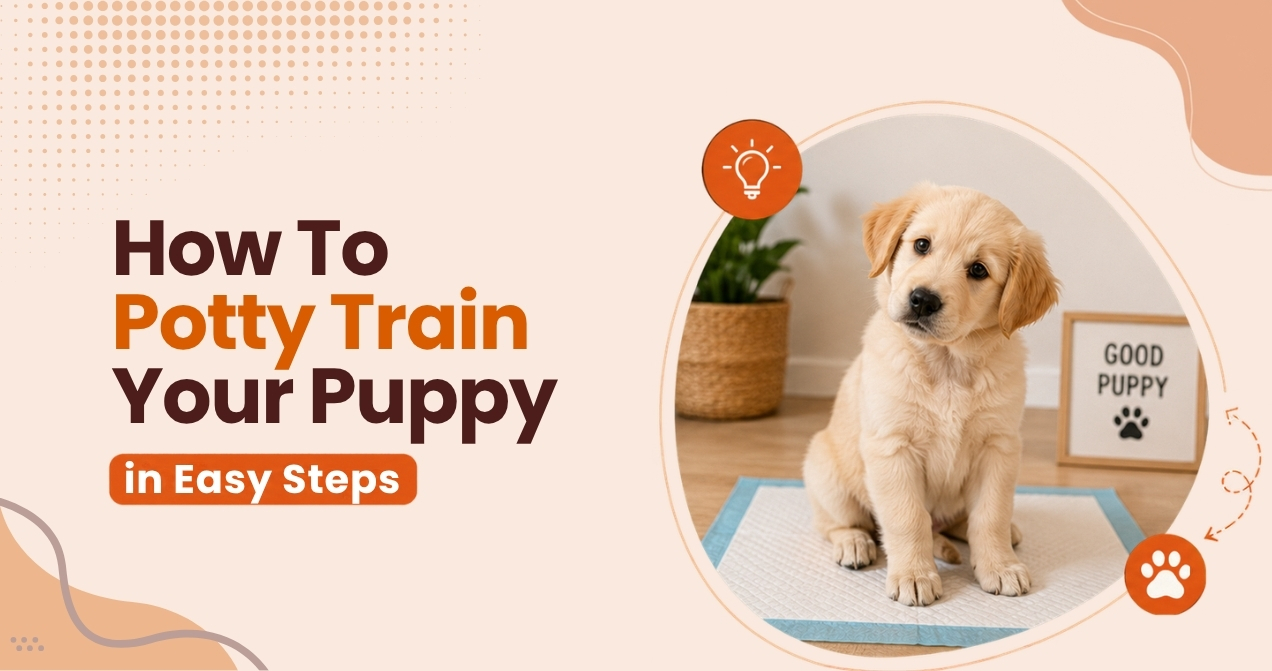
Bringing home a new puppy is exciting until the first accident on your favorite rug. If you are wondering on how to potty train your puppy without stress than you're not alone and it's one of the most common questions every new pet parents usually ask. The good news is that the puppy potty training doesn't have to be so complicated. With the consistent routine and little patience most of puppies pick it up faster than you'd expect. At ZoodleApp we want every pet parent to feel confident from the day one so here's a simple easy to follow guide on how to house train a puppy.
When to Start Potty Training a Puppy and How Long Does It Takes
Puppy potty training age typically starts around 8 weeks old once a puppy has the basic bladder control. As for how long does it take to potty train puppy than most pups are reliably house trained between 4 to 6 months though a full bladder control can take up to a year for some of breeds. Starting early with right puppy house training habits makes the whole process smoother.
Recommended Schedule for the Puppy Potty Breaks
A solid puppy potty training schedule is the backbone of success. As a general rule, take your puppy out:
First thing in the morning, right after waking up
Within 10–15 minutes after eating or drinking
After naps or play sessions
Every 1–2 hours for young puppies
Right before bedtime
Puppy pee training works best when breaks happen before accidents and not after. Puppies have the small bladders and limited control so that regular outings help to prevent accidents.
Tips for Potty Training a Puppy in an Apartment
Apartment living adds few extra challenges but it's absolutely doable. Try these puppy training tips -
Use puppy crate training to build bladder control between trips outside since most of the puppies avoid soiling their own sleeping space
Use the same door and route each time so that your puppy learns that it leads to the potty breaks
If elevators or stairs slow you down than consider a designated pee pad or turf spot on balcony as a backup
Lean on a positive reinforcement puppy training such as treats, praise or a happy tone when the moment your puppy goes in the right spot
Crate training for potty training works especially well in smaller homes since it naturally limits access to areas where accidents are easy to miss.
A Step-by-Step Guide to the Potty Train a Puppy at Home
Here's the best way to potty train a puppy broken into simple steps -
Pick one designated spot outside and take your puppy there every time, so the scent reinforces the habit.
Follow a consistent schedule rather than waiting for signals alone — this is often the fastest way to learn how to potty train a puppy fast.
Use crate or confined space indoors when you can't supervise directly, which supports both puppy crate training and puppy toilet training together.
Try to make sure that to give reward immediately after a successful pottying so your puppy can clearly connects behavior with a positive reinforcement.
Supervise closely indoors especially in the early weeks so that you can catch and redirect your puppy before an accident happens.
Clean accidents thoroughly with an enzyme cleaner since lingering odor can undo your puppy bathroom training progress by attracting your puppy back to the same spot.
For puppy poop training at night, take your puppy out right before bed and set an alarm for one middle-of-the-night break for very young pups. Slowly stretch this gap as your puppy grows, and most puppies can sleep through the night by 4–5 months. Knowing how to potty train a puppy at night this way prevents both accidents and a frustrated, sleep-deprived household.
If you're dealing with a setbacks than don't worry because learning on how to stop a puppy from peeing in the house and how to stop a puppy from pooping in the house usually comes down to going back to basics like a tighter supervision, a stricter schedule and no punishment for the accidents which can only creates fear and confusion.
Signs That Your Puppy Needs Go Outside
Learning how to teach a puppy to poop outside also means learning to read their body language. Watch for:
Sudden sniffing or circling in one spot
Whining or barking near the door
Scratching at the door or floor
Pausing mid-play and wandering off
Restlessness after eating or after waking up
Catching these cues early is often difference between easy puppy potty training and a mess to clean up.
Conclusion
Consistency, patience and a little trial and error is required when you potty training a puppy but all pet parents will eventually reach their goals. Follow schedule, acknowledge the successes, and remain cool during the missteps and your puppy will pick up on it before you know it. Along the way, do you need some extra assistance, for example, a trusted sitter who can help keep your puppy on track while you are busy? With the ZoodleApp, pet parents can meet verified, caring pet care professionals who can help maintain your puppy's routine; good habits are formed by potty breaks. With more than 10,000+ verified pet sitters across major Indian cities like Delhi, Mumbai, Bangalore, and Hyderabad, ZoodleApp makes finding trusted pet care simple and hassle-free.